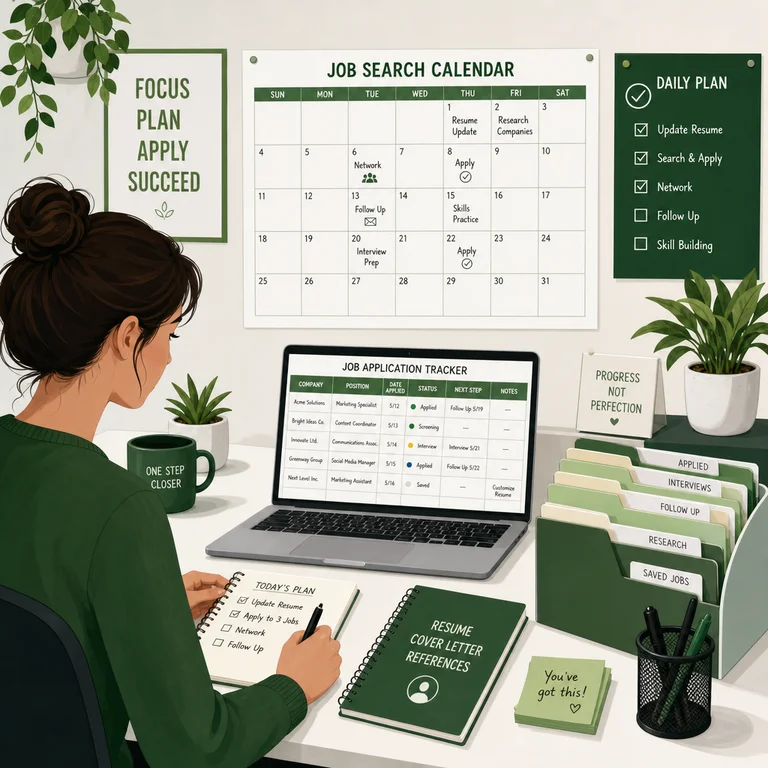
Job Search Mistakes That Keep You Unemployed Longer
Avoid these costly job search mistakes that extend unemployment and learn what hiring managers notice and how to fix your approach for faster results.
Anúncios
Applying to Everything Instead of Targeting Strategically
Mass-applying to every remotely relevant posting feels productive but produces terrible results. Hiring managers can spot generic applications instantly and each submission that gets rejected wastes time you could spend crafting one compelling targeted application.
Choose ten companies you genuinely want to work for and research them deeply. Understand their challenges, culture, and recent initiatives. Applications built around specific company knowledge outperform generic ones by enormous margins consistently.
Anúncios
Why Does Your Resume Keep Getting Filtered Out?
Applicant tracking systems scan for keyword matches before any human sees your documents. If your resume uses different terminology than the job posting it gets filtered automatically. Mirror the exact language from each listing while maintaining honest descriptions.
Formatting matters more than most candidates realize. Complex layouts with tables, graphics, and unusual fonts confuse parsing software. Clean single-column formats with standard section headers pass through ATS filters reliably every time.
Anúncios
Ignoring the Hidden Job Market Entirely
Published job listings represent roughly thirty percent of available positions. The remaining seventy percent get filled through internal referrals, network connections, and direct recruiting. Focusing exclusively on posted jobs limits opportunities dramatically.
Informational interviews, industry meetups, and alumni networks open doors that job boards cannot reach. One genuine conversation with someone inside a target company provides more leverage than fifty online applications submitted cold.
How Are You Presenting Yourself on Social Media?
Recruiters check social profiles as standard practice now. Contradictions between your professional persona and social media activity raise immediate red flags that create hesitation during candidate evaluation processes.
LinkedIn profiles that merely list job titles miss opportunities for differentiation. Add accomplishments with quantified results, thoughtful recommendations, and engagement with industry content to create a profile that works as a living portfolio.
Failing to Follow Up After Applications
Submitting an application and waiting passively works only when competition is minimal. Following up one week after applying with a brief professional email demonstrates initiative and keeps your name visible among hundreds of candidates.
Keep follow-ups short and add value. Reference a recent company development or share a relevant insight rather than simply asking about application status. Value-added follow-ups create positive impressions instead of appearing desperate.
What Happens When You Skip Interview Preparation?
Walking into interviews relying on personality and experience alone ignores that preparation is visible to experienced interviewers. Researched candidates ask better questions, give more relevant examples, and demonstrate genuine interest.
Practice answering behavioral questions using the STAR method until responses feel natural rather than rehearsed. Record yourself answering common questions and review recordings for filler words, vague answers, and nervous habits.
Underestimating the Importance of Thank-You Notes
Post-interview thank-you emails influence hiring decisions more than candidates believe. A personalized note referencing specific conversation points reinforces your candidacy and demonstrates follow-through that generic templates cannot achieve.
Send thank-you notes within twenty-four hours of each interview round. Address specific topics discussed, reiterate relevant qualifications, and express genuine enthusiasm without resorting to hollow flattery or excessive eagerness.
Are You Asking for Too Little or Too Much Money?
Salary expectations that fall significantly below market rate signal desperation or lack of awareness. Expectations far above market without justification end conversations prematurely before you can demonstrate your value.
Frame salary conversations around total compensation rather than base pay alone. Benefits, equity, bonuses, retirement matching, and professional development budgets all carry monetary value that affects your true earnings substantially.
Neglecting Skills Development During Your Search
Long job searches create gaps that make future applications harder. Using search time to earn certifications, complete projects, or build portfolio pieces transforms unemployment gaps into professional development periods.
Choose skills development aligned with positions you target. Earning a certification that appears frequently in desired job listings gives you both knowledge and a concrete credential to reference during applications and interviews.
How Does Desperation Show Up in Your Applications?
Hiring managers develop intuition for desperate applicants. Excessive eagerness, willingness to accept any terms, and over-the-top enthusiasm read as red flags rather than positive signals during evaluation processes.
Practice patience during the process. Accepting an ill-fitting role out of urgency typically leads to another job search within months. Strategic patience that waits for appropriate opportunities produces better long-term career outcomes.
Not Leveraging Recruiters and Staffing Agencies
External recruiters access positions that never get publicly posted. Building relationships with recruiters in your industry creates a parallel search channel operating independently of your direct applications.
Be selective about which recruiters you engage. Those who specialize in your industry and level understand market rates and company cultures. Generalist agencies that submit candidates everywhere provide less targeted representation overall.
Burning Bridges During Your Current Exit
How you leave your current position affects future opportunities through references and industry reputation. Professional departures with adequate notice and thorough handoffs preserve options that angry exits permanently destroy.
Even in frustrating situations strategic exits protect long-term interests. Industries are smaller than they appear and hiring managers routinely check references through back channels that extend far beyond names you voluntarily provide.