How to Organize Your Job Search for Maximum Results
Organize your job search with tracking systems, scheduling strategies, and workflow optimization turning scattered effort into productive results.
Anúncios
Why Most Job Searches Fail From Disorganization
Without systems candidates apply to the same company twice, miss follow-up windows, forget interview details, and lose track of resume versions. This chaos wastes hours and creates embarrassing mistakes.
Organized searches produce measurably better results enabling strategic decisions. Seeing your entire pipeline reveals gaps, patterns, and where effort produces highest return.
Anúncios
What Should You Track in a Job Search Spreadsheet?
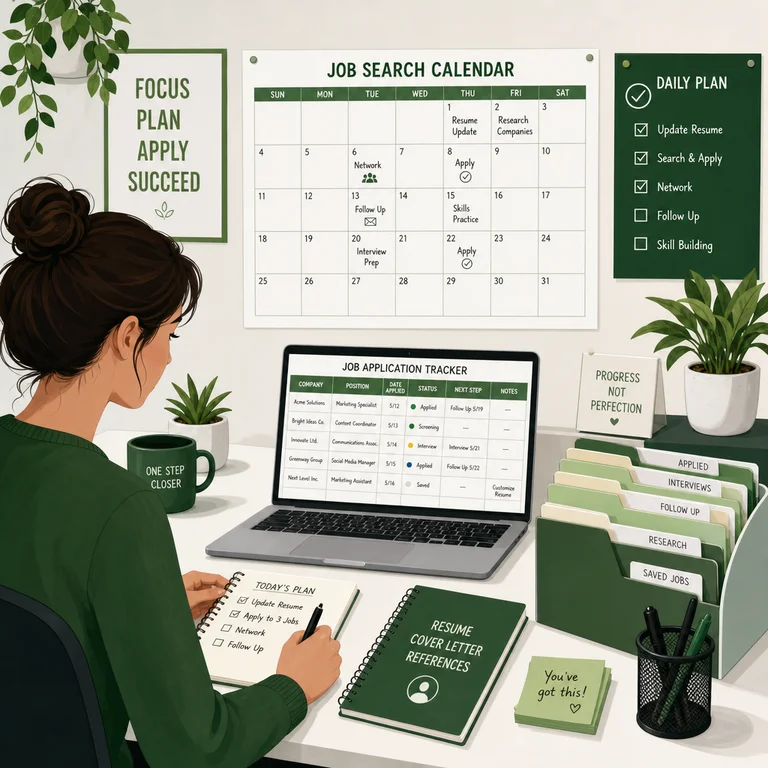
Track company, position, application date, resume version, contact person, follow-up dates, interview dates, and status. This searchable record prevents duplicates and missed deadlines.
Add columns for company research notes, interview impressions, and salary information. These details inform future applications and provide reference when companies call unexpectedly.
Anúncios
How Should You Structure Your Daily Routine?
Allocate specific blocks for different activities. Morning for research, midday for applications, afternoon for networking and follow-ups. Batching similar tasks improves efficiency dramatically.
Set goals measured by controllable outputs. Three quality applications daily provides concrete targets. Avoid measuring solely by responses since that metric is outside your control.
Which Tools Help Manage Job Search Pipelines?
Spreadsheets work for most searchers with Google Sheets providing cloud access. Trello visualizes pipeline stages. Purpose-built tools like Huntr and Teal provide job-specific features.
Choose tools you will use consistently. A sophisticated abandoned system provides less value than a simple spreadsheet updated daily. Consistency matters more than features.
How Do You Prioritize Which Jobs to Apply For?
Rate opportunities on role fit, company appeal, and success probability. Focus highest effort where all three score well. Apply to stretch positions selectively.
Twenty percent of applications produce eighty percent of interviews. Identifying high-yield application types lets you redirect effort from low-return activities to high-impact ones.
Should You Set Application Quotas?
Quality quotas outperform quantity. Three excellent daily applications produce better results than twenty rushed submissions. Each deserves research, customization, and genuine engagement.
Track conversion rates to calibrate quotas. If ten applications produce one interview and three interviews one offer, calculate weekly applications needed to hit timeline goals.
Managing Multiple Interview Processes
Parallel processes require scheduling coordination. Maintain a dedicated calendar with buffer time between interviews for preparation and decompression.
Communicate honestly about timelines without artificial urgency. Mentioning active processes motivates companies while maintaining professional transparency.
What Should You Prepare Before Each Interview?
Create one-page company briefs with recent news, products, team structure, and questions. Reference during screens and before meetings for quick preparation.
Maintain master achievement stories in STAR format. Before each interview select three to five most relevant and practice natural delivery.
How to Handle Emotional Ups and Downs Systematically
Schedule check-ins to assess emotional state and adjust pace. Job searching is a marathon requiring energy management. Pushing through exhaustion produces poor results.
Track wins alongside setbacks. Every connection, skill, and completed interview represents progress. Acknowledging small wins sustains motivation through long searches.
Organizing Your Digital Presence
Audit LinkedIn, GitHub, website, and portfolio before active searching. Ensure consistent messaging across platforms presenting a coherent professional narrative.
Set Google alerts for your name monitoring digital footprint. Hiring managers search for candidates online before and after interviews.
When Should You Reassess Strategy?
Review monthly using tracked data. Applications failing at the same stage indicate that stage needs improvement. Aggregate data reveals patterns invisible from individual experiences.
Major reassessments after thirty applications without interviews or five interviews without offers suggest systemic issues requiring strategic adjustment.
Closing Out and Starting Strong
After accepting an offer send professional closure messages to active processes. Thank interviewers and express appreciation for considering your candidacy.
Archive search materials including spreadsheets and resume versions. These resources prove valuable for future searches or when helping colleagues with their own searches.